


Most people are familiar with hot welding, which involves using high heat to fuse materials. However, cold welding is another popular technique that joins materials without melting them. If you’re starting a new fabrication project and aren’t sure which method to use, let’s break down the differences between hot versus cold welding and the appropriate applications for each.
What Is Hot Welding?
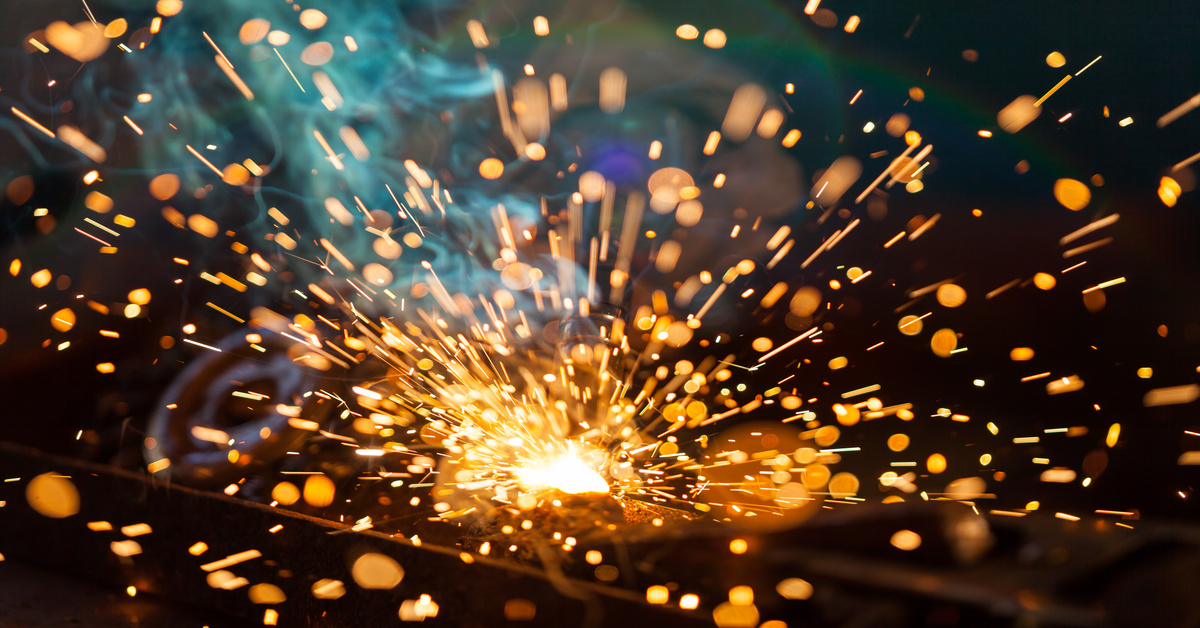
Hot welding is a fabrication process that uses intense heat to melt and join pieces of metal. You melt the base materials with a heat source and then add a filler material to the joint, which forms a strong bond as it cools. This method is what most people picture when they think of welding: sparks flying and a bright arc of light.
There are different types of hot welding. Arc welding, which includes stick, TIG, and MIG welding, uses an electric arc to create heat. Gas welding uses a flame from burning gases such as acetylene. Laser-beam welding uses a focused laser. All these methods rely on high temperatures to create a permanent, powerful connection between metal parts.
Benefits of Hot Welding
Hot welding is a popular, versatile method for joining materials. Let’s look at some of the advantages that make it a common choice for many projects.
High Strength and Durability
One benefit of hot welding is the exceptional joint strength it creates. When you melt and fuse metals, they form a continuous structure. This results in a bond that can be as strong as, or even stronger than, the original materials. Due to the joints’ ability to withstand heavy loads and stress, industries such as building construction, automotive, and shipbuilding commonly use hot welding for structural applications such as frames and load-bearing components.
Versatility Across Metals
Hot welding techniques can join a wide range of metals and alloys. Different processes are optimal for specific materials, from common steel and aluminum to more specialized alloys. For example, TIG welding provides precise control for joining thin stainless steel or aluminum, while stick welding is robust enough for thick steel plates in outdoor conditions. This flexibility allows you to select a method that fits your material.
Cost-Effectiveness for Certain Applications
Hot welding can be extremely cost effective for many large-scale industrial and construction projects. Equipment for common arc welding processes such as stick and MIG welding is widely available and relatively affordable. The filler materials are also economical, which makes hot welding a practical option for projects with tight budgets where strength is still a primary requirement.
What Is Cold Welding?

Cold welding, or contact welding, is a solid-state process that joins metals without using heat. Instead of melting the materials, this technique uses extreme pressure to force two clean, flat metal surfaces together. The applied pressure deforms the surfaces at an atomic level, which allows the atoms of each piece to bond and form a single, solid piece.
For cold welding to work, the metal surfaces must be exceptionally clean and free of any oxidation or contaminants. This is typically achieved by cleaning the surfaces in a vacuum or with a wire brush immediately before applying pressure. This process is most effective with soft, ductile metals such as aluminum, copper, and silver. You won’t see any sparks or arcs—it’s a quiet, clean process.
Benefits of Cold Welding
Cold welding provides unique benefits, which makes it a valuable process in specific industries and applications.
No Heat-Affected Zone
Since cold welding doesn’t involve heat, it doesn’t create a heat-affected zone (HAZ) around the weld. In hot welding, the high temperatures can alter the properties of the area near the weld, which can lead to weakening or distortion. Cold welding avoids this, which preserves the base metal’s original temper and strength. This is a massive advantage when one is working with heat-sensitive components, as in electronics or aerospace.
Joins Dissimilar Metals
Cold welding is very effective at joining dissimilar metals that are difficult or impossible to join with hot welding. Traditional welding methods can create brittle intermetallic compounds when used on different metals, which weakens the joint. Cold welding bypasses this issue by creating a direct atomic bond. This allows for reliable connections between metals such as aluminum and copper.
Clean and Contaminant-Free
The process of cold welding is inherently clean. It doesn’t produce fumes, sparks, or spatter like hot welding does. Since it’s often performed in a vacuum or controlled environment to keep the surfaces pure, the risk of introducing contaminants into the weld is very low. This results in a high-purity joint, which is a requirement for applications in the semiconductor, medical, and aerospace industries.
Which Method Is Right for Your Project?
Choosing between hot and cold welding depends entirely on your project’s specific needs. Both methods are effective, but they serve different purposes. Consider these factors to make a decision.
Material Type
What kind of metal are you using? Hot welding is versatile and works with a wide range of ferrous and nonferrous metals. Cold welding is limited to softer, nonferrous metals such as aluminum and copper. It also requires the surfaces to be exceptionally clean, so metals with impurities or oxidation will prevent a strong bond.
Project Environment
Where will you be doing the work? Hot welding creates sparks, fumes, and intense light, so it requires a well-ventilated space and proper safety equipment. It’s not a process you can do just anywhere.
Cold welding is a cleaner, quieter process. It’s suitable for controlled environments such as cleanrooms. If you’re working with sensitive electronics or in an environment where heat and fumes are unacceptable, cold welding is the better method.
Component Sensitivity
Are the parts you’re joining sensitive to heat? The heat from hot welding can warp thin materials or damage nearby electronic components. The heat-affected zone can also alter the metal’s properties.
Cold welding is the clear winner when you need to avoid heat. It’s ideal for joining parts that are part of a larger, heat-sensitive assembly. You can create a strong bond without any risk of thermally damaging the surrounding components.
Your Next Welding Project Starts Here
Hot welding and cold welding are both effective methods for joining metals; they just have different applications and benefits. You’ll likely use each of them at some point on different projects.
If you need supplies for your next welding project, whether that involves fabricating a custom part or fixing a broken metal fence around your property, Muggy Weld has maintenance welding products, including solders, rods, and electrodes, for you. Stock up on what you need to create strong, clean welds today.