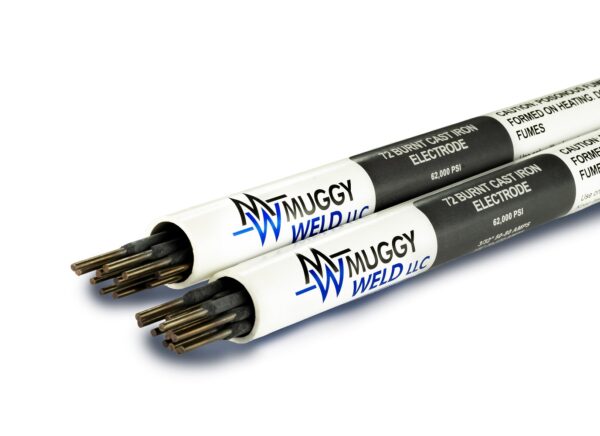
Introducing 72 Burnt Cast Iron Welding Rod
72 Electrode is a premium burnt cast iron welding rod engineered for the toughest repairs. It’s specially designed to bond to oil-soaked, heat-affected, and previously welded castings, making it the best choice for burnt cast iron welding and repair. Whether you’re restoring a cracked engine block, rebuilding a manifold, or repairing contaminated cast iron components, 72 provides the strength, penetration, and reliability you need for dependable results.
Why Choose 72 Cast Iron Welding Rod
- Strong Metallurgic Bond: The unique alloy composition penetrates deep into the parent metal, forming a durable foundation for burnt cast iron repairs.
- Engineered for Burnt Cast Iron Welding: 72 is formulated to fuse directly with burnt, contaminated, or oil-soaked cast iron surfaces where ordinary nickel rods fail.
- Ideal Base Layer for Multi-Step Cast Iron Welding: Use 72 as the first pass to anchor the weld, then overlay with 77 for a machineable finish, or 75 for nodular and ductile castings.
- No Preheating Required: In most burnt cast iron welding applications, 72 can be used without preheating.
- Porosity-Free and Crack-Resistant: Produces dense, clean welds even on contaminated or previously repaired cast iron parts.
- Dependable for All Types of Burnt Cast Iron Repair: Ideal for engine components, manifolds, and other parts exposed to extreme heat.
Learn How to Repair with 72 Burnt Cast Iron Welding Rod – Complete Video Series
Kit Includes:
Mixed Diameter
- 3/32” Diameter: 2 rods, 14-inch length
- 1/8” Diameter: 2 rods, 14-inch length
½ lb
- 3/32” Diameter: 11 rods, 14-inch length
- 1/8” Diameter: 7 rods, 14-inch length
1 lb
- 3/32” Diameter: 22 rods, 14-inch length
- 1/8” Diameter: 14 rods, 14-inch length
5 lb
- 3/32” Diameter: 132 rods, 14-inch length
- 1/8” Diameter: 84 rods, 14-inch length
Shelf Life and Storage
Store 72 Burnt Cast Iron Welding Rods in a dry area at room temperature. Keep rods sealed in their original packaging or in an airtight tube, to prevent moisture absorption. When stored properly, the electrodes maintain full performance and weld quality indefinitely.
How to Use 72 Burnt Cast Iron Electrode
- Prepare the Surface: Remove heavy scale, rust, or dirt from the repair area with a grinder or wire brush
- Set Amperage: Use the recommended amperage range for the rod size. Begin at the lower end and adjust as necessary for full penetration
- Short Arc Technique: Maintain a short arc length for better control and deeper fusion
- Peen Each Bead: Lightly peen the weld while still hot to relieve stress and prevent cracking
- Cool Naturally: Allow part to cool slowly in still air
- For Finishing: Overlay with 77 for machineable, cosmetic welds, or with 75 for ductile and nodular cast iron repairs
Note: DC Reverse (+), AC. For best results, clean and bevel the cast iron before welding. Remove all surface oil and grease along with rust, paint, etc. Clean the surface with a grinder or sanding disk, until the surface is bright and shiny. Use stringer or moderate weave technique. When cladding, cover the entire base surface prior to finish welding. Not recommended for cast iron cookware.
Common Applications
- Repairing burnt, oil-soaked, or contaminated cast iron
- Rebuilding engine blocks, manifolds, and heads exposed to high heat
- Restoring cracked or distorted machinery bases and housings
- Welding heavy or difficult-to-clean industrial castings
- Creating a foundation layer before applying 75 or 77 rods for a smooth, finished weld
What Our Customers Are Saying About 72 Burnt Cast Iron Welding Rods
I purchased a sample kit (7 2& 77 rod) for repairing a damaged bolt hole on a small block Chevy that secures the starter to the block. I used the cast iron welding rod to secure a piece of threaded 3/8 steel rod into the damaged hole where the outside starter bolt would normally have threaded into the engine block. The original threaded hole had the cast iron ripped out the side of the casting when the starter had kicked back on the 388 stroker engine. Hei-coils were out of the question, the walls were too thin (what was left) because of the casting thickness.
I used the 77 rod with a 230v AC stick welder with 95-100amps of power. Built up one small layer of rod at a time cleaning slag off after each pass. I am only a back yard welder and was impressed how well the weld turned out but not only that, it held without cracking. This method of repair saved the engine block from the junk yard.
I would just like to thank Muggy Weld for producing such an amazing welding rod that make’s it possible to repair high nickel content cast iron. And by the way, this was repaired while the engine was in the car!! Thanks again. — Earl Scott Hammonton, New Jersey
Frequently Asked Questions
- Do I need to preheat before using 72?
No preheating is required for most repairs. For very large or thick sections, preheating to around 400°F may reduce stress.
- Can it weld clean, gray cast iron?
Yes, but for the best finish and machinability, use 77 Cast Iron Welding Rods after applying 72 as a foundation.
- Can I machine the weld after using 72?
The 72 deposit itself is not suitable for machining. For a machinable finish, apply a layer of 77 over the 72 foundation.
- What polarity should I use?
Use DC reverse polarity (electrode positive) for best results.
- Can 72 be used on previously welded or brazed cast iron?
Yes. 72 is formulated to bond to contaminated or heat-affected castings where other rods fail.
72 Electrode is the trusted solution for repairing burnt, contaminated, and oil-soaked cast iron. Its deep-penetrating alloy composition creates a strong, reliable foundation.