

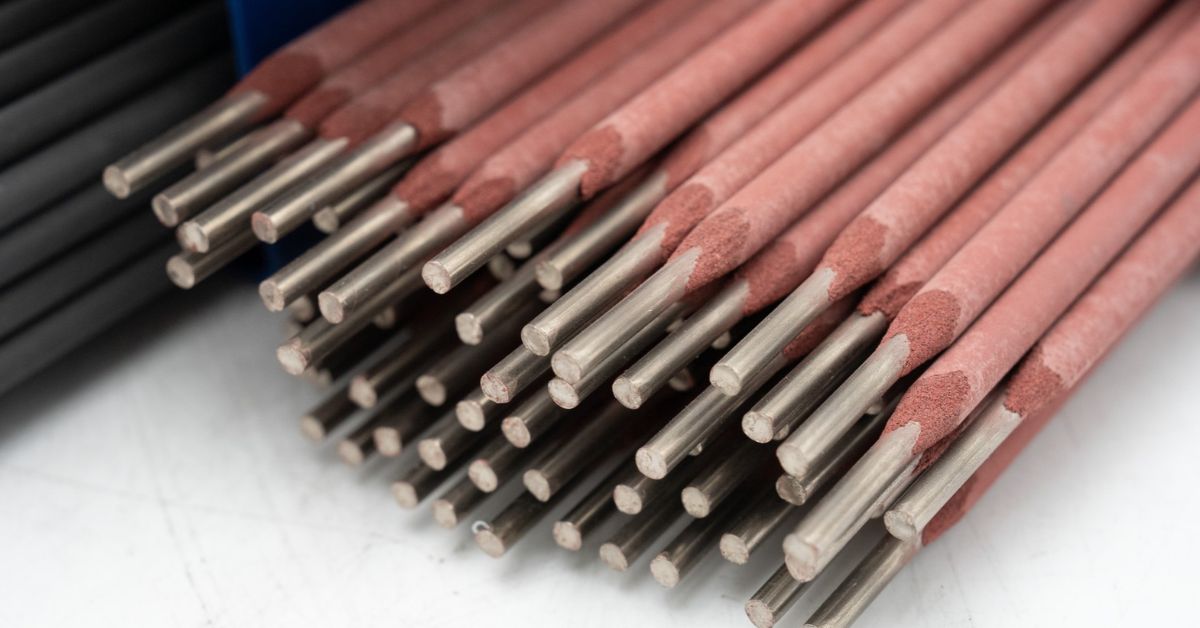
Welding rods are metal filler materials used to create bonds between metal components during welding. They come in many different compositions, with each type designed for specific metals and welding conditions.
Most home welders will want to have a selection of rods on hand for repairs that involve different materials. After all, a rod that performs beautifully on mild steel won’t necessarily give you the same results on cast iron. Here are some must-have welding rods for your home garage and what makes each type useful.
E6011 Welding Rods
E6011 rods are stick welding electrodes known for their deep penetration and ability to work on less-than-perfect metal surfaces. They’re a solid option when you’re repairing older steel components that have developed surface rust.
Their penetrating arc reaches into the base metal, creating welds on surfaces where certain other electrodes struggle. They also operate on AC or DC current, making them compatible with many home welding machines.
However, E6011 rods produce considerable spatter, so your finished weld may require additional cleanup. Their aggressive arc takes some practice to control, but they perform well during outdoor repairs where surface preparation is limited.
E6013 Welding Rods
For projects involving relatively thin mild steel, E6013 welding rods are another addition to consider for your garage. Their smoother arc makes them easier to control than electrodes designed for deep penetration.
These rods produce shallow to moderate penetration, which reduces the risk of burning through thinner materials. They’re commonly used for light fabrication projects where extreme penetration isn’t necessary.
E6013 electrodes also produce slag that generally separates easily after welding, making cleanup less demanding. However, they aren’t intended for every structural application, so you’ll need to confirm that their strength and penetration meet your project’s requirements.
E7018 Welding Rods
E7018 rods are low-hydrogen electrodes used for welding steel components that require high-strength connections. Their deposited weld metal has a minimum tensile strength of 70,000 psi when tested under the applicable classification requirements.
The low-hydrogen formulation reduces the risk of hydrogen-related cracking, which becomes increasingly concerning when welding thicker steel. That makes these electrodes a preferred choice for demanding repair projects where weld integrity is a priority.
However, E7018 rods require proper storage because their coatings absorb moisture. Once exposed to excessive humidity, the electrodes may need reconditioning under manufacturer specifications or replacement before use.
Super Alloy 1 Low-Temperature Solder Rods
Not every metal repair requires the intense heat associated with traditional welding. Super Alloy 1 solder rods work at approximately 350°F, allowing you to repair certain delicate metal components without melting the surrounding material.
These rods are particularly effective for pot metal repairs because they work at temperatures below the metal’s melting point. For instance, you can use them to restore damaged decorative components without exposing them to excessive heat.
The accompanying flux changes color when the metal reaches the proper working temperature. However, these rods contain cadmium, so appropriate fume extraction and strict adherence to the manufacturer’s safety instructions are essential.
Super Alloy 5 Aluminum Welding Rods
Aluminum presents unique challenges because it conducts heat rapidly and develops an oxide layer that interferes with bonding. Super Alloy 5 rods offer a lower-temperature method for joining aluminum using a compatible torch.
These rods work at approximately 600°F and use a specially formulated flux to address surface oxidation. They’re useful for cast aluminum repairs, including damaged components that would be difficult to repair with conventional welding equipment.
Unlike aluminum solder intended for delicate repairs, Super Alloy 5 supports stronger connections in certain demanding applications. However, the base metal must still be prepared according to the manufacturer’s instructions to achieve proper bonding.

77 Cast Iron Welding Rods
Cast iron is notoriously difficult to weld because its high carbon content increases the risk of cracking during heating and cooling. Standard steel electrodes aren’t designed to handle these characteristics.
The 77 cast iron electrode is formulated to create crack-resistant welds on gray cast iron. It offers a repair solution for damaged castings when replacing the entire component would be expensive or inconvenient.
These rods produce machinable deposits, allowing you to finish the repaired surface after welding. However, cast iron repairs still require careful temperature control, and short weld beads may be necessary to limit cracking.
72 Burnt Cast Iron Welding Rods
Some cast iron components experience years of exposure to extreme temperatures, which changes the condition of the metal. Exhaust manifolds are a common example because repeated heating cycles gradually affect their surfaces.
The 72 burnt cast iron welding rod is formulated for repairing cast iron damaged by prolonged heat exposure. It provides an alternative when conventional cast iron electrodes struggle to bond with the affected material.
These electrodes are designed for restoring components that have experienced repeated thermal stress. Depending on the casting’s condition, cleaning and additional preparation may still be necessary before attempting the repair.
75 Nickel-Iron Welding Rods
Different cast iron types require different welding materials, so identifying the base metal before starting your project is essential. The 75 nickel-iron electrode is formulated for malleable cast iron and certain related cast iron classifications.
Its nickel-iron composition supports weld deposits designed to accommodate these materials. This makes it useful when repairing cast components whose properties differ from traditional gray cast iron.
However, using the proper electrode doesn’t eliminate the need for controlled welding techniques. Excessive heat or rapid cooling may still damage the casting, so the repair procedure must account for the component’s condition.
SSF-6 Silver Solder Rods
SSF-6 silver solder rods contain 56 percent silver and melt at approximately 1,150°F. They’re designed for brazing applications where you need to join metal components without melting the base materials.
Their high silver content produces durable joints, making them a good choice for repairing stainless steel components. The filler metal flows into narrow gaps between closely fitted surfaces, creating a bond as it cools.
The rods also have a flux coating that eliminates the need to apply a separate flux in standard applications. However, the metal surfaces still need proper cleaning before brazing to allow the filler to bond correctly.
ER70S-2 TIG Welding Rods
ER70S-2 rods are solid filler rods commonly used in TIG welding applications involving mild steel. Unlike stick welding electrodes, these rods don’t produce their own arc because the TIG torch supplies the welding heat.
Their composition includes deoxidizing elements that improve weld quality when minor surface contaminants remain after preparation. As a result, they’re a popular selection for detailed steel fabrication projects where precise control over filler metal is necessary.
TIG welding also produces welds without the slag coating associated with stick electrodes. However, ER70S-2 rods require compatible TIG equipment and shielding gas, so they’re intended for garages equipped for that process.
Stock Your Garage With the Right Welding Supplies
These are some of the must-have welding rods for your home garage. Depending on the type of metalwork you perform, you may not need every rod discussed here, but having several options available allows you to handle a wider range of repairs.
At Muggy Weld, we sell welding consumables for everyone from home welding enthusiasts to experienced professionals. Shop our selection of specialty welding rods and brazing materials to find products for your next metal repair project.