
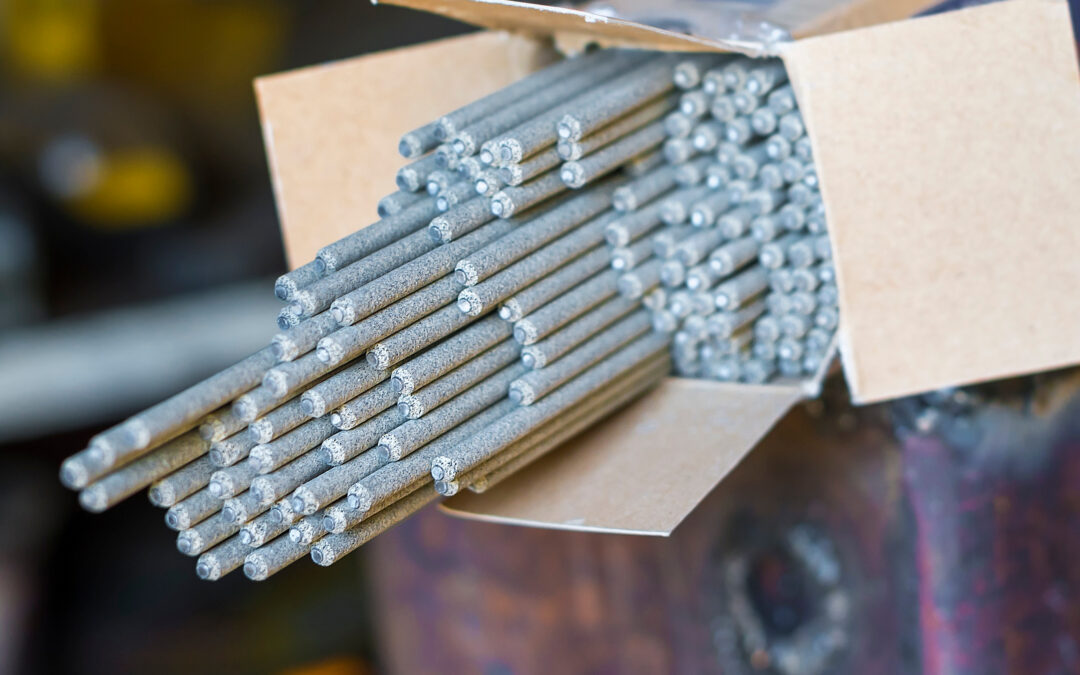
You’ve got a broken bracket or a fence that needs fixing, so you head to the shop or pull up a website. Then you stop cold. Whether you’re staring at physical shelves or scrolling through a product page, you’re met with a wall of numbers and colors you don’t recognize. You just want to stick two pieces of metal together without it falling apart! What does all this mean?
Picking the right consumable doesn’t have to be a mystery. We’ll walk you through the different types of welding rods so you’ll know exactly what’s what. You’ll see the numbers, uses, and learn why some rods run smooth while others dig deep.
Mild Steel Electrodes
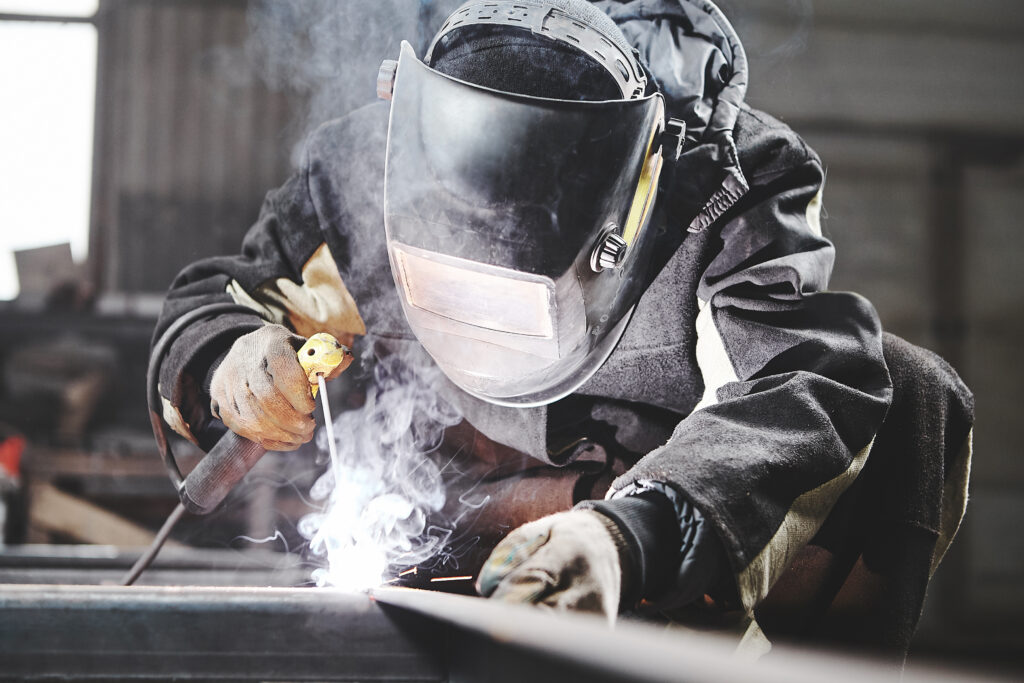
A person wearing full welding gear leaning over a metal frame, using an electrode to weld its joints together.
These are the most common and versatile rods you’ll come across, especially if you’re just starting. They’re great for a wide range of general-purpose welding jobs.
- How They Work: Mild steel rods are user-friendly. They create a stable arc and produce a smooth weld bead. The slag, which is the protective layer that forms over the weld, is easy to remove once it cools.
- Common Uses: You’ll see these used for fabricating sheet metal, repairing equipment, and general maintenance work. Their versatility makes them a staple in almost any workshop.
- Popular Types: Rods like the 6010, 6011, and 7018 fall into this category. The numbers actually mean something; for example, in a 7018 rod, the “70” means it has a tensile strength of 70,000 pounds per square inch.
Stainless Steel Electrodes
When you’re working with stainless steel, you need a rod that matches its properties. Using the wrong rod can lead to rust and a weak weld.
- How They Work: Stainless steel electrodes preserve the corrosion-resistant properties of the base metal. They come in various grades, like 308L or 316L, which you’ll need to match to the specific type of stainless steel you’re welding.
- Common Uses: These are essential in the food and beverage industry, chemical plants, and medical equipment manufacturing. Any application where rust can’t be tolerated is a job for a stainless steel rod.
- Benefits: The main benefit is creating a weld that is just as strong and rust-resistant as the stainless steel itself. This keeps the integrity of the entire structure intact.
Cast Iron Electrodes
Welding cast iron is notoriously tricky because it’s brittle and can crack easily when heated and cooled. Cast iron electrodes are made to handle these challenges.
- How They Work: These rods typically have a high nickel content. Nickel is much more flexible than iron, so it can handle the stresses of heating and cooling without cracking. This makes the weld strong and durable.
- Common Uses: You’ll use these for repairing engine blocks, machine parts, and antique ironwork. They’re perfect for fixing cracks or joining broken cast iron pieces.
- Important Tip: When welding cast iron, preheat the metal before you start and let it cool down very slowly afterward. This helps prevent the base metal from cracking.
Silver Electrodes
You can use silver electrodes to join metals like copper, brass, or steel when you need a clean, high-quality finish.
- How They Work: Because silver electrodes melt at lower temperatures than other metals, welders use them for delicate work like precision repairs and fine metal joins. They flow smoothly into joints to create strong bonds without warping or damaging the base metals.
- Common Uses: You’ll find silver electrodes in industries like electronics, jewelry making, HVAC repairs, and plumbing. They’re also widely used for electrical connections due to silver’s excellent conductivity.
- Benefits: Silver electrodes create joints that are both strong and corrosion-resistant. They also leave a clean, polished finish, which is why they’re commonly used for applications where aesthetics and durability are important.
Aluminum Electrodes
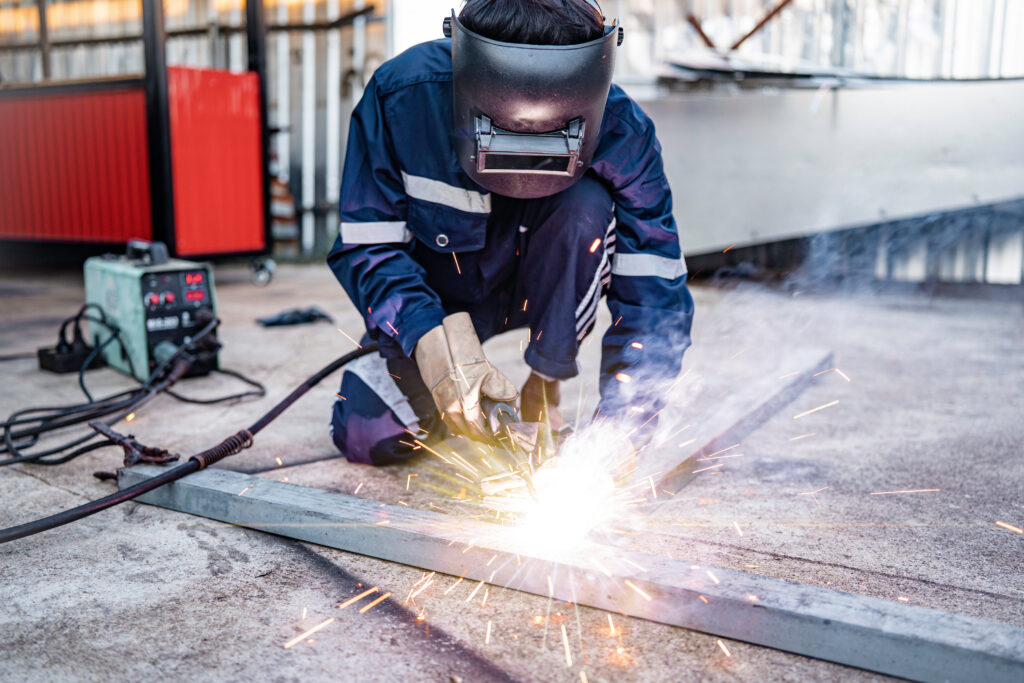
A person wearing a welding helmet kneeling on the floor of a workshop, using a torch to join two pieces of a metal frame.
Aluminum is a lightweight metal with a low melting point. It’s prone to warping or burn-through. To handle these challenges, you need a specialized electrode that provides stable arc control, minimal heat input, and the ability to clean through aluminum’s stubborn oxide layer.
- How They Work: Aluminum electrodes are made to work with the unique properties of aluminum. They help clean the surface as you weld, which is important because aluminum quickly forms an oxide layer that can interfere with the weld.
- Common Uses: These are used for repairing boats, automotive parts, and any other items made from aluminum. They’re also used in fabrication where light weight is a priority.
- Challenges: Welding aluminum can be difficult because the metal doesn’t change color before it melts. This means you have to be very careful with your heat control to avoid blowing a hole right through your workpiece.
Hardfacing Electrodes
Sometimes, the goal isn’t to join two pieces of metal but to add a protective layer to a surface. These situations call for hardfacing electrodes.
- How They Work: These rods deposit a layer of super-hard, wear-resistant material onto a metal surface. This new surface can stand up to abrasion, impact, and friction much better than the original metal.
- Common Uses: Hardfacing is used all the time on heavy equipment like bulldozer blades, excavator buckets, and farming tools. It dramatically extends the life of parts that see a lot of wear and tear.
- Benefits: Instead of replacing an expensive part, you can just re-apply a hardfaced layer. This saves a ton of money and reduces downtime for your equipment.
Low Hydrogen Electrodes
Controlling hydrogen is very important in certain types of welding, especially on high-strength steels. Too much hydrogen can get trapped in the weld and cause it to become brittle and crack.
- How They Work: Low hydrogen electrodes have a special flux coating that contains very little moisture. To keep them dry, you need to store them in a special heated oven until they’re ready to be used. This prevents hydrogen from getting into your weld.
- Common Uses: These are the go-to rods for structural steel, bridges, and other high-stress applications where weld failure isn’t an option. The 7018 rod is a popular example of a low hydrogen electrode.
- Key Feature: The resulting weld is very strong and ductile, meaning it can flex under stress without breaking. This is why they’re trusted for such important jobs.
Finishing the Job Right
Choosing the right electrode is one of the most important decisions you’ll make for any project. Whether you’re patching up a piece of farm equipment or fabricating something from scratch, the rod you use will determine the quality and longevity of your work.
Hopefully, this guide has explained the different types of welding rods and given you a better understanding of what’s out there. Taking the time to match your electrode to your metal and your project’s needs will pay off with strong, reliable welds every time.
If you need to purchase affordable, high-quality welding consumables, come shop at Muggy Weld. We have all kinds of different rods, including silver, nickel, and cast iron options, as well as other welding products for just about any project.