
9 Pot Metal Repairs for Classic Car Restoration
Classic car restoration often depends on saving a small original part that is difficult or impossible to replace. This collection includes grilles, heater controls, steering components, hood hardware, and decorative castings made from pot metal or zinc die cast, with damage ranging from broken pieces to holes and missing sections of metal.
The projects in this video span vehicles and antique equipment from the 1920s through the 1970s. Each repair uses Super Alloy 1 Low-Temperature Solder with its liquid flux.
Classic Car and Antique Pot Metal Repairs
The montage includes nine different restoration projects:
- 1947 Diamond T grille: a pot metal grille repair
- 1967 Firebird: a broken heater control arm
- 1972 Ford PU: a piece of pot metal soldered to a steering column collar
- 1920 Phonograph Support Arm: a missing chunk of zinc die cast
- 1940 DeSoto: a pot metal hood latch component
- 1970 Mustang: a vintage metal headlight bucket
- 1968 Chevy Nova: a small original heater control
- 1933-34 Dodge Ram: a decorative pot metal hood ornament
- 1929 Briggs and Stratton Carburetor: a hole in the carburetor bowl
Keep Original Pot Metal Parts with the Vehicle
Rare and irreplaceable components create a different problem from repairing an easily replaced modern part. A broken heater control arm, hood ornament, or steering column component may be physically small, but locating another correct casting can become one of the harder parts of a restoration.
Super Alloy 1 pot metal repair kit produces a metal-to-metal soldered joint rather than an epoxy-type repair. That gives restorers an option for keeping the original metal component with the vehicle instead of replacing the damaged area with a non-metal filler.
The repair method depends on the damage. A clean break needs to be joined, while a hole or missing section requires new material to be built up. Pitted castings require still another approach. Repairing pot metal pits with Super Alloy 1 involves removing oxidation and chrome, tinning the damaged surface, and preparing the part for plating.
Use the Super Alloy 1 Flux as a Temperature Guide
Pot metal has a relatively low melting point, which is one reason temperature matters during these repairs. Super Alloy 1 has a working temperature of 350°F and bonds at about half the melting point of pot metal.
The liquid flux changes from a honey color to root beer brown when the parent metal reaches the working temperature. This gives the restorer a visible reference for when to apply the filler rod rather than judging temperature solely by the appearance of the metal.
The repairs in this montage were completed with a handheld propane torch. Super Alloy 1 can also be applied with MAPP gas, butane, oxyacetylene, a heat gun, or a large soldering iron.
Repair Missing Metal, Pits, Gaps, and Broken Pieces
The 1920 phonograph support arm and 1929 Briggs and Stratton carburetor required more than reconnecting two broken halves. Metal was missing from the phonograph support arm, while the carburetor bowl had a hole that needed to be filled.
Super Alloy 1 can be built up after the initial application, allowing missing areas to be reconstructed. It can also be used to fill gaps and tin pitted areas.
Finish Restored Parts for Chrome or Powder Coating
Many of these components are visible parts of the finished vehicle, so the soldering work may only be one stage of the restoration. A grille, hood ornament, emblem, window frame, or headlight component may still need to be shaped and prepared for its final finish.
After soldering, Super Alloy 1 can be shaped, polished, painted, chrome-plated, or powder-coated. For chrome-plated pot metal, the old chrome must be removed before soldering. The repaired part can then be prepared for replating.
That makes the process relevant not only to broken parts but also to pitted and damaged castings that ultimately need to match the surrounding restored vehicle.
More Pot Metal Repair Techniques
Muggy Weld’s pot metal repair video library includes additional repairs involving classic car grilles, emblems, carburetors, pitting, missing pieces, oxidation, dissimilar metals, and other zinc die cast and pot metal components.
Disclaimers:
Please visit https://www.aws.org/Standards-and-Publications/Free-Resources/#YourResources before using our welding products, and adhere to all AWS welding safety guidelines.
Further product safety information is available at https://muggyweld.com/safety-guidelines
Muggy Weld LLC shall not be liable for any loss, injury, claim, liability, or damage of any kind resulting in any way from (a) your use of this Site, (b) any services or products obtained from this Site, (c) any errors in or omissions from this Site, (d) the unavailability or interruption of this Site or any features thereof, (e) any content contained on this Site.
SDS sheets available with purchase from MuggyWeld.com, upon request.
Updated 10/3/26
Check Out These Products
-
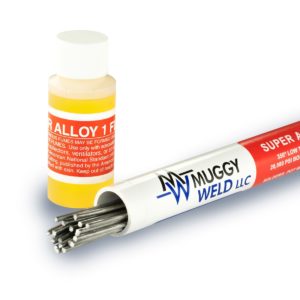
Super Alloy 1 Low-Temperature Solder
Price range: $55.00 through $980.00350º F multi-metal solder joins pot metal and all white metals, in any combination🌡 Melting Temperature 350 / 177 ⇄︎ Bonding Strength 20000 psi, 137.89 MPa -
Super Alloy 5 Aluminum Welding and Brazing Rod
Price range: $55.00 through $980.00600°F aluminum welding, brazing, and soldering rod. Ideal for aluminum boat repair and cast aluminum.🌡 Melting Temperature 600 / 317 ⇄︎ Bonding Strength 30000 psi, 206.84 MPa -
Sale!

SSF-6 Silver Solder Rod: Flux-Coated SSF-6 56% Brazing Rod
Price range: $100.00 through $3,000.00High-Strength, 56% Silver Solder Rod🌡 Melting Temperature 1150 / 621 ⇄︎ Bonding Strength 70000 psi, 482.63 MPa 🔧︎ Sizes Available (in) 1/16 🔧︎ Sizes Available (mm) 1.58