
Repair Cast Zinc at Home | Welding Rod for Cast Zinc Statue Repair
A Muggy Weld customer successfully used Super Alloy 1 and an oxyacetylene torch to repair a cast zinc statue that was damage din multiple areas. This life-sized zinc die cast statue had broken severely along the base, with cracks running from top to bottom. Because cast zinc can be challenging to work with, the repair required a strong, dependable alloy capable of restoring structural strength and durability.
To rebuild the statue’s base, brass was first used to fill larger gaps in the damaged sections. Super Alloy 1 bonded the cast zinc die cast to the brass effortlessly, creating a solid and lasting repair. This project demonstrates how DIY users can effectively repair cast zinc pieces at home using the right low-temperature welding rod. In addition to brass and zinc die cast, Super Alloy 1 can be used to effectively solder copper to aluminum, galvanized metals, steel, zinc-plated steel, brass to stainless, and more.
Before beginning the cast zinc statue repair, the customer used a Dremel tool to remove oxidation and corrosion from the zinc surface. Proper surface preparation is essential when working with zinc die cast, as oxidation can prevent a clean bond. Once cleaned, the customer dipped the Super Alloy 1 rod into the flux and applied flux to the work area one section at a time.
Because of the statue’s large size, several kits of 1/8-inch diameter rods were needed to reconstruct the base piece by piece. For projects involving heavy cast zinc parts, we recommend using a push-button torch tip rather than a standard brass tip. Standard tips often fail to produce a focused flame strong enough to evenly heat large cast zinc sections.
Why Cast Zinc Was Traditionally Difficult to Repair
Zinc die cast has historically been difficult to repair due to its low melting temperature and inconsistent chemical composition. Traditional welding methods often overheat zinc, causing warping or further damage. Super Alloy1 solves this problem by melting at only 350ºF, making it ideal for beginners and experienced welders alike.
With Super Alloy 1, even a novice can repair cast zinc statues quickly and easily, without expensive or specialized welding equipment. An added benefit is the alloy’s temperature-guiding flux, which changes color from honey gold to root beer brown when the parent metal reaches the correct working temperature. This provides and exact visual indicator, helping prevent overheating during delicate zinc repairs.
Applying the Rod Correctly
Once the flux changes color, apply the filler rod while keeping the torch moving continuously. This avoids overheating the fragile cast zinc parts and ensures a smooth, strong bond.
Note: Heat Freeze Heat Paste may be used to prevent previously repaired areas from remelting while working on remaining cracks or breaks.
Finishing the Repair
After completely reconstructing the statue’s base one break at a time, the remaining flux residue was removed using a wire brush and warm water. The result was a solid, restored cast zinc statue base, proving that with the right alloy, cast zinc statue repair can be done successfully as a DIY project.
Disclaimers:
Please visit https://www.aws.org/Standards-and-Publications/Free-Resources/#YourResources prior to using our welding products, and adhere to all AWS welding safety guidelines.
Further product safety information is available at https://muggyweld.com/safety-guidelines
Muggy Weld LLC shall not be liable for any loss, injury, claim, liability, or damage of any kind resulting in any way from (a) your use of this Site, (b) any services or products obtained from this Site, (c) any errors in or omissions from this Site, (d) the unavailability or interruption of this Site or any features thereof, (e) any content contained on this Site.
MSDS sheets available with purchase from MuggyWeld.com, upon request.
Updated 2/4/26
Check Out These Products
-
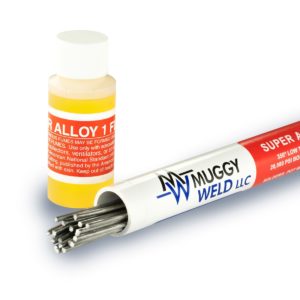
Super Alloy 1 Low-Temperature Solder
Price range: $55.00 through $980.00350º F multi-metal solder joins pot metal and all white metals, in any combination🌡 Melting Temperature 350 / 177 ⇄︎ Bonding Strength 20000 psi, 137.89 MPa -
Sale!
Super Alloy 5 Aluminum Welding and Brazing Rod
Price range: $48.30 through $686.00600°F aluminum welding, brazing, and soldering rod. Ideal for aluminum boat repair and cast aluminum.🌡 Melting Temperature 600 / 317 ⇄︎ Bonding Strength 30000 psi, 206.84 MPa -

SSF-6 Silver Solder Rod: Flux-Coated SSF-6 56% Brazing Rod
Price range: $135.00 through $3,000.00High-Strength, 56% Silver Solder Rod🌡 Melting Temperature 1150 / 621 ⇄︎ Bonding Strength 70000 psi, 482.63 MPa 🔧︎ Sizes Available (in) 1/16 🔧︎ Sizes Available (mm) 1.58