
SSF-6 Silver Solder is a high strength, flux-coated stainless steel brazing rod that can be used to bond many metals: copper, brass, cast iron, stainless, bronze, gold, silver and more.
In this instructional video, we demonstrate how to utilize a propane torch and SSF-6 to solder a piece of thin brass tubing to a piece of stainless steel tubing. SSF-6 is highly effective for creating bonds even in hard to reach areas, with a bonding strength of over 70,000 psi.
Prior to filming, we prepared the stainless steel and brass with a wire brush to remove any impurities that may inhibit a proper bond.
Next, we created a joint, secured the parts, and began to gently preheat the stainless and brass with the propane torch to gradually bring both metals to the SSF-6 working temperature.
As you can see, we brought the metals to a dull red color, which indicated they were at the correct temperature to accept the stainless steel brazing rod.
A small amount of flux was applied by quickly touching the rod to the joint under the continually moving flame.
See how the flux flows into the joint? When a small amount of the stainless steel brazing rod is added, it follows the flux and seals the joint.
This high flowing rod will flow up to 18 inches for every inch of solder applied, making it an ideal solution for applications such as plumbing repair. And SSF-6 is cadmium free, so it can be used in any pharmaceutical, medical, or restaurant application safely.
After brazing the joint, we removed residual flux with warm water and an abrasive wire brush, then finished both pieces with a polishing wheel.
SSF-6 enables professional quality repairs at a fraction of the price, with your own torch, in your own setting.
Disclaimers:
Please visit https://www.aws.org/Standards-and-Publications/Free-Resources/#YourResources prior to using Muggy Weld products, and adhere to all AWS welding safety guidelines.
Further product safety information is available at http://muggyweld.com/safety-guidelines
Muggy Weld LLC shall not be liable for any loss, injury, claim, liability, or damage of any kind resulting in any way from (a) your use of this Site, (b) any services or products obtained from this Site, (c) any errors in or omissions from this Site, (d) the unavailability or interruption of this Site or any features thereof, (e) any content contained on this Site.
MSDS sheets available with purchase from MuggyWeld.com, upon request.
Check Out These Products
-
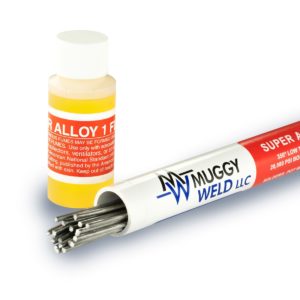
Super Alloy 1 Pot Metal Solder and Multi-Metal Solder
$69.00 – $109.00350º F multi-metal solder joins pot metal and all white metals, in any combination🌡 Melting Temperature 350 / 177 ⇄︎ Bonding Strength 20000 psi, 137.89 MPa -
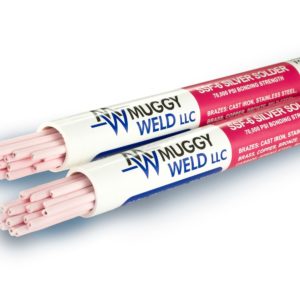
SSF-6 Silver Solder Rod: Flux-Coated SSF-6 56% Brazing Rod
$69.00 – $260.00High-Strength, 56% Silver Solder Rod🌡 Melting Temperature 1150 / 621 ⇄︎ Bonding Strength 70000 psi, 482.63 MPa 🔧︎ Sizes Available (in) 1/16 🔧︎ Sizes Available (mm) 1.58 -
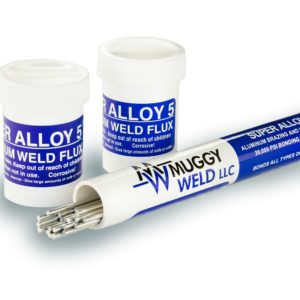
Super Alloy 5 Aluminum Welding and Brazing Rod
$69.00 – $109.00600°F aluminum welding, brazing, and soldering rod. Ideal for aluminum boat repair and cast aluminum.🌡 Melting Temperature 600 / 317 ⇄︎ Bonding Strength 30000 psi, 206.84 MPa