
Troubleshooting Super Alloy 5
Many aluminum repair problems begin long before the rod touches the metal. A repair that refuses to flow, a rod that balls up, or a hole that grows larger instead of closing often leads users to believe the product is not working. In most cases, the real issue comes down to heat control, torch setup, or technique. The good news is that these problems are usually easy to correct.
This guide covers the most common challenges people encounter when using Super Alloy 5 aluminum brazing rods and explains how small adjustments can lead to much better aluminum repair results.
Understanding How Super Alloy 5 Works
Super Alloy 5 is an aluminum repair system that combines a filler rod and powdered flux. The system is designed for aluminum welding, brazing, and soldering applications. Success depends on heating the parent metal correctly and allowing the flux to guide the process. When the aluminum reaches the proper temperature, the rod flows smoothly and bonds to the repair area. When the temperature is wrong, problems begin to appear.
Choosing the Correct Rod Size
Before troubleshooting technique, it helps to verify that the correct rod size is being used.
1/16-Inch Rod for Thin Aluminum
The smaller rod works well on:
- Air conditioning components
- Aluminum radiators
- Evaporators
- Thin automotive parts
These applications require precise control and lower filler volume.
3/32-Inch Rod for Larger Repairs
The larger rod is often used for:
- Cast aluminum
- Bridging gaps
- Filling larger holes
- Thicker aluminum sections
For users who already own the larger rod, it can be flattened with a hammer when a thinner profile is desired.
Problem: The Aluminum Never Gets Hot Enough
One of the most common issues involves insufficient heat.
Check the Torch Tip
A torch capable of producing a stronger flame often improves performance significantly.
Use Adjustable Flame Control When Possible
Torches with adjustable flame controls can provide additional heat when larger aluminum parts require it. Aluminum absorbs and disperses heat quickly, so having adequate heat output is important.
Problem: The Metal Will Not Reach Temperature
Sometimes the issue is not the torch.
Heat Is Escaping Through the Work Surface: Many users place aluminum directly on a metal workbench or clamp it tightly in a vise. Metal tables and vises act as heat sinks. They pull heat away from the repair area and make it difficult for the aluminum to reach working temperature.
Create a Thermal Barrier: Lift the aluminum off the work surface using steel wire, fire bricks, ceramic tiles, or similar materials. Reducing heat loss often solves temperature problems immediately.
Problem: The Flux Will Not Stick to the Rod
Warm the Rod First
Briefly heat the end of the rod and then dip it into the powdered flux. The slight warmth helps the flux adhere to the rod more effectively. If the flux does not stick the first time, repeat the process.
Problem: The Rod Balls Up Instead of Flowing
This is one of the most common troubleshooting questions.
The Parent Metal Is Not Hot Enough
When the aluminum welding rod balls up, many users mistakenly assume the repair area is ready. This usually means the aluminum has not yet reached the proper working temperature.
Continue Heating the Aluminum
Rather than focusing on the rod, continue heating the parent metal until the correct temperature is reached. The rod should flow because of the heat stored in the aluminum itself.
Problem: The Repair Area Is Blocked by the Rod
Another frequent mistake occurs when users place the rod directly over the crack or hole before the aluminum is hot enough.
Heat the Area Around the Damage
Broadly heat the area adjacent to the crack or hole instead of blocking the repair zone with the rod. This allows the surrounding aluminum to reach temperature and prevents heat from being drawn away from the repair.
Using Flux as a Temperature Guide
One of the most useful features of Super Alloy 5 is the powdered flux.
Watch for Visual Changes
The recommended sequence is:
- Preheat the aluminum
- Broadly heat the parent metal
- Apply flux
- Continue heating
- Watch for the flux to become clear and watery
- Apply the rod
When the flux becomes clear and fluid, the aluminum is generally ready for filler material.
Working with Thin Aluminum
Thin aluminum requires special care.
Keep the Torch Moving
Holding the flame in one spot can quickly overheat the material. Continuous movement prevents melting thin aluminum sections.
Pull Away Once the Rod Flows
As soon as the filler material flattens and flows into place, remove the heat. This helps preserve the surrounding metal.
Working with Thick Aluminum
Larger repairs require a slightly different approach.
Preheat Longer
When joining two aluminum parts together, additional preheating helps ensure both pieces reach working temperature.
Heat the Thicker Section More
If one piece is significantly thicker than the other, apply more heat to the heavier section. This helps both pieces reach working temperature at roughly the same time. Balanced heating promotes smoother filler flow and stronger repairs.
Better Technique Leads to Better Repairs
Most aluminum repair issues can be traced back to heat management, setup, or timing. The good news is that these problems are usually easy to fix. A stronger torch setup, better heat retention, proper use of flux, and patience during preheating can dramatically improve results.
Super Alloy 5 was designed to simplify aluminum welding, but like any process, technique matters. Once users learn to read the flux, heat the parent metal properly, and avoid common mistakes, aluminum repairs become far more predictable and successful.
Disclaimers:
Please visit https://www.aws.org/Standards-and-Publications/Free-Resources/#YourResources prior to using our welding products, and adhere to all AWS welding safety guidelines.
Further product safety information is available at https://muggyweld.com/safety-guidelines
Muggy Weld LLC shall not be liable for any loss, injury, claim, liability, or damage of any kind resulting in any way from (a) your use of this Site, (b) any services or products obtained from this Site, (c) any errors in or omissions from this Site, (d) the unavailability or interruption of this Site or any features thereof, (e) any content contained on this Site.
MSDS sheets available with purchase from MuggyWeld.com, upon request.
Updated 7/22/2026
Check Out These Products
-
Super Alloy 1 Low-Temperature Solder
Price range: $55.00 through $980.00350º F multi-metal solder joins pot metal and all white metals, in any combination🌡 Melting Temperature 350 / 177 ⇄︎ Bonding Strength 20000 psi, 137.89 MPa -
Sale!
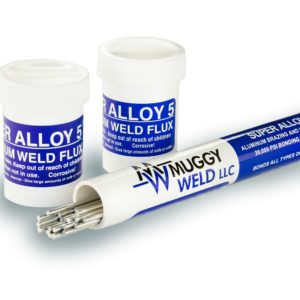
Super Alloy 5 Aluminum Welding and Brazing Rod
Price range: $55.00 through $980.00600°F aluminum welding, brazing, and soldering rod. Ideal for aluminum boat repair and cast aluminum.🌡 Melting Temperature 600 / 317 ⇄︎ Bonding Strength 30000 psi, 206.84 MPa -

SSF-6 Silver Solder Rod: Flux-Coated SSF-6 56% Brazing Rod
Price range: $135.00 through $3,000.00High-Strength, 56% Silver Solder Rod🌡 Melting Temperature 1150 / 621 ⇄︎ Bonding Strength 70000 psi, 482.63 MPa 🔧︎ Sizes Available (in) 1/16 🔧︎ Sizes Available (mm) 1.58