
Repair a 1967 Mustang Aluminum Hood Molding
A broken piece of trim on a classic Mustang can create a bigger problem than its size suggests. Original moldings are thin, easy to damage, and often worth saving when the rest of the piece is still in good shape. Replacing them can also mean hunting for another vintage part that matches the car.
This 1967 Ford Mustang aluminum hood molding had broken completely in half. The metal was extremely thin, so the repair called for a light approach. Super alloy 5 with a 1/16 inch diameter rod was paired with a propane torch. The smaller rod gives better control over the amount of filler added, while propane supplies enough heat for such a thin aluminum part.
Why Thin Mustang Trim Calls for Less Heat
Heavy aluminum castings can absorb a great deal of torch heat before they reach brazing temperature. A thin hood molding behaves very differently. Heat travels through the narrow section quickly, and holding the flame in one place can melt the original aluminum before the repair is complete.
Start by warming a broad area around the break. Move the propane flame back and forth rather than concentrating it directly on the broken edge. The goal is to bring both sides of the molding up to working temperature while keeping the thin parent metal intact.
This is why the 1/16-inch Super Alloy 5 rod suits the job. A small filler rod gives you more control on narrow trim than a heavier rod would.
Use the Flux to Prepare the Broken Aluminum
Once the molding begins to warm, heat the end of the Super Alloy 5 rod and dip it into the powder flux. Transfer the flux to the broken area, then continue warming the aluminum. The flux helps remove oxidation and can work through paint, oil, dirt and grease. It also serves as a temperature guide for the repair.
That second role is especially useful on thin vintage trim. Aluminum does not give much visual warning before it melts, so the flux provides a safer way to judge when the molding is ready for the filler rod.
Watch for the 600°F Flux Change
Super Alloy 5 works at 600°F. As the parent aluminum approaches that temperature, the flux changes from a powdery appearance to a translucent, watery liquid. That change is the cue to begin adding rod. There is no need to keep heating the molding while waiting for some other sign from the aluminum itself.
Touch the rod to the fluxed area and let the heat stored in the parent metal begin flowing the filler. Keep the torch moving while you work so one part of the thin molding does not take too much heat.
Fill Both Sides of the Broken Hood Molding
Since this Mustang molding was broken in half, the repair needs to join more than the visible face. Work Super Alloy 5 into the break and alternate between filler rod and flux until the joint is filled on both the front and the back. Adding filler from both sides help rebuild the broken section while keeping the amount of material manageable. The rod can also bridge gaps and build missing areas if the break did not leave two perfectly matching edges.
This ability matters on classic car trim. A decades-old break may have chipped edges or lost a small amount of metal, so simply pushing the two halves together may not restore the original shape.
Clean the Mustang Molding After Brazing
Allow the repaired molding to cool before cleaning away the remaining flux. Warm water and a wire brush can remove the residue from the finished joint. Super Alloy 5 closely matches the color the the aluminum, which is useful on a visible piece of exterior trim. The finished alloy can also be bent, drilled, machined, or plated if the molding needs more work before it goes back on the Mustang. The bond is rated 30,000 PSI.
Keeping a Piece of the 1967 Mustang on the Car
A hood molding may be a small part of a 1967 Mustang, but original trim helps give the car its character. This piece had already survived nearly sic decades before breaking in half, and its thin aluminum construction made replacement seem like an easier choice.
A small Super Alloy 5 rod and an ordinary propane torch give the broken molding another path. The repair rebuilds the joint without asking the fragile trim to withstand the kind of heat used on a heavy aluminum casting. Once cleaned and finished, the original molding can return to the car rather than becoming another discarded piece of its history.
Disclaimers:
Please visit https://www.aws.org/Standards-and-Publications/Free-Resources/#YourResources prior to using our welding products, and adhere to all AWS welding safety guidelines.
Further product safety information is available at https://muggyweld.com/safety-guidelines
Muggy Weld LLC shall not be liable for any loss, injury, claim, liability, or damage of any kind resulting in any way from (a) your use of this Site, (b) any services or products obtained from this Site, (c) any errors in or omissions from this Site, (d) the unavailability or interruption of this Site or any features thereof, (e) any content contained on this Site.
MSDS sheets available with purchase from MuggyWeld.com, upon request.
Updated 9/8/26
Check Out These Products
-
Super Alloy 1 Low-Temperature Solder
Price range: $55.00 through $980.00350º F multi-metal solder joins pot metal and all white metals, in any combination🌡 Melting Temperature 350 / 177 ⇄︎ Bonding Strength 20000 psi, 137.89 MPa -
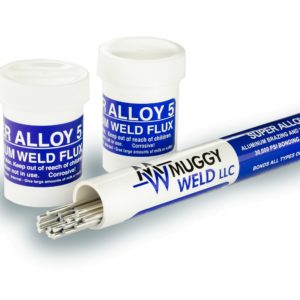
Super Alloy 5 Aluminum Welding and Brazing Rod
Price range: $55.00 through $980.00600°F aluminum welding, brazing, and soldering rod. Ideal for aluminum boat repair and cast aluminum.🌡 Melting Temperature 600 / 317 ⇄︎ Bonding Strength 30000 psi, 206.84 MPa -
Sale!

SSF-6 Silver Solder Rod: Flux-Coated SSF-6 56% Brazing Rod
Price range: $100.00 through $3,000.00High-Strength, 56% Silver Solder Rod🌡 Melting Temperature 1150 / 621 ⇄︎ Bonding Strength 70000 psi, 482.63 MPa 🔧︎ Sizes Available (in) 1/16 🔧︎ Sizes Available (mm) 1.58