
How to Fix Pot Metal: Tips for Beginners
A first time welder uses Super Alloy 1 and a propane torch to fix a broken piece of pot metal.
In response to customer requests, we are producing a “beginner” series of instructional videos. This video features Tawny using a propane torch and Super Alloy 1 to fix pot metal at 350 degrees. Step by step instructions are shown, enabling beginners to fix broken or pitted white metal parts like a pro.
Super Alloy 1 can be used to join aluminum, bronze, steel, copper, white metal, or brass in any combination, at 350°F.
As you can see, this large piece of pot metal has a large gap missing. Tawny used a soaked piece of wood as a backer, to hold the molten solder in place while it cools.
She heats the pot metal in a perpendicular fashion, moving the torch constantly side to side. This technique ensures the propane torch will not overheat the low temperature pot metal, which melts at 420 °C. Pot metal’s low melting point has been a thorn in the side of many DIYers, so we wanted to demonstrate how anyone–even a beginner–can fix pot metal without a professional.
After heating the area adjacent to the area in need of the Super Alloy 1 filler rod, she begins to move the torch closer to the gap. This pot metal piece is quite thick, so it required a lot of preheating.
Tawny dipped the rod into the flux and used the rod to apply the flux to the pot metal she intends to fix. When the flux changes color from golden to brownish colored, Tawny begins to rub the rod across the pot metal, building up the missing piece to fill the pot metal gap. She breaks off pieces of the flux, building across the gap and allowing the filler rod to fill the missing piece. She then applies more flux to flow the rod out and smooth its appearance.
To finish the repair, Tawny uses a wire brush and warm water to remove the flux, then grind the part down.
That’s it! It’s easy to fix pot metal with the right tools. Thank you, Tawny!
Disclaimers:
Please visit https://www.aws.org/Standards-and-Publications/Free-Resources/#YourResources prior to using Muggy Weld products, and adhere to all AWS welding safety guidelines.
Further product safety information is available at http://muggyweld.com/safety-guidelines
Muggy Weld LLC shall not be liable for any loss, injury, claim, liability, or damage of any kind resulting in any way from (a) your use of this Site, (b) any services or products obtained from this Site, (c) any errors in or omissions from this Site, (d) the unavailability or interruption of this Site or any features thereof, (e) any content contained on this Site.
MSDS sheets available with purchase from MuggyWeld.com, upon request.
Check Out These Products
-
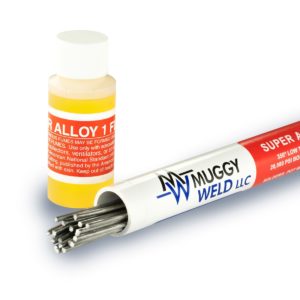
Super Alloy 1 Pot Metal Solder and Multi-Metal Solder
$69.00 – $109.00350º F multi-metal solder joins pot metal and all white metals, in any combination🌡 Melting Temperature 350 / 177 ⇄︎ Bonding Strength 20000 psi, 137.89 MPa -
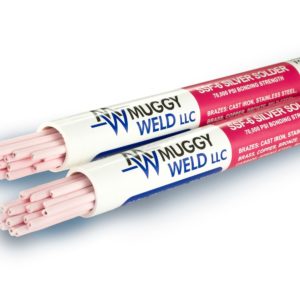
SSF-6 Silver Solder Rod: Flux-Coated SSF-6 56% Brazing Rod
$69.00 – $260.00High-Strength, 56% Silver Solder Rod🌡 Melting Temperature 1150 / 621 ⇄︎ Bonding Strength 70000 psi, 482.63 MPa 🔧︎ Sizes Available (in) 1/16 🔧︎ Sizes Available (mm) 1.58 -
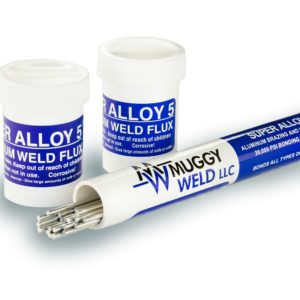
Super Alloy 5 Aluminum Welding and Brazing Rod
$69.00 – $109.00600°F aluminum welding, brazing, and soldering rod. Ideal for aluminum boat repair and cast aluminum.🌡 Melting Temperature 600 / 317 ⇄︎ Bonding Strength 30000 psi, 206.84 MPa