
Aluminum Boat Welding: Seam Repair With Super Alloy 5
Why Aluminum Boats Require a Different Repair Approach
Aluminum boats are widely used because they are strong, lightweight, and cost effective. They are found in everything from pontoons and canoes to airboats and outboard motor components.
Even with those advantages, aluminum requires a different approach when it comes to maintenance. The material can corrode over time, and repairs are not handled the same way as fiberglass. Knowing how aluminum boat welding works is part of keeping the boat in usable condition.
Common Problems That Lead to Aluminum Boat Welding
Separated Seams
Seams can split or separate from repeated use, vibration, and stress. Once that happens, water can enter the hull, and the problem will continue to spread if it is not addressed.
Cracks and Worn Areas
Areas exposed to rocks, gravel, or impact can wear thin or crack. These sections often require aluminum boat welding to restore strength.
Holes and Rivet Issues
Small holes and failing rivets are also common. The same method used for seam repair can be applied to these areas. The technique shown here is not limited to one type of repair. It can be used across many parts of an aluminum boat.
Heat Requirements for Aluminum Boat Welding
Aluminum dissipates heat quickly, which is why an oxygen fueled torch is required. Oxyacetylene, oxy-MAP, or oxy-propane can all be used to bring the base metal up to working temperature.
Super Alloy 5 flux becomes liquid at 600°F, which indicates the aluminum is ready for the rod. This removes guesswork and helps prevent overheating during aluminum boat welding, and removes surface contamination during the process, allowing repairs to be made without extensive pre-cleaning.
Why Epoxy Fails on Aluminum Boats
When dealing with a separated seam, many people turn to epoxy. While it may appear to work at first, it does not hold up under real conditions.
Epoxy is flexible and can peel away as the aluminum continues to move. This leads to repeated repairs and ongoing leaks. A proper aluminum boat welding method creates a metal to metal bond that holds up under stress and does not require constant rework.
Aluminum Boat Welding with Super Alloy 5
Super Alloy 5 provides a way to complete aluminum boat welding without complex equipment. It creates a bond with a strength of 30,000 psi, making it suitable for permanent repairs.
The process is straightforward and does not require advanced welding experience. The materials are portable, so they can be kept on hand for quick repairs when needed.
Tools Needed for Aluminum Boat Welding
To complete the repair, you will need:
- An oxyacetylene torch or similar oxygen-fueled system
- Super Alloy 5 rod and powder flux
Having these tools ready before starting helps keep the process smooth and controlled.
How to Repair a Seam with Aluminum Boat Welding
Heat the Surrounding Area
Begin by heating the aluminum around the seam. This prevents the cooler metal from pulling heat away from the repair area.
Prepare the Rod with Flux
Heat the tip of the rod and dip it into the flux. This prepares it for application and helps with bonding.
Apply Flux to the Seam
Melt the flux onto the repair area. As it liquefies, it signals that the metal has reached the proper temperature.
Deposit the Rod
Apply the rod directly to the seam and continue heating. Add more flux as needed while building up the repair. This process allows the material to flow into the seam and create a sealed joint.
Where This Aluminum Boat Welding Method Can Be Used
The same process can be applied to a wide range of aluminum boat repairs, including:
- Pontoon boats
- Canoes and rafts
- Airboats
- Propellers
- Cast aluminum outboard motors
It is also effective for cracks, splits, holes, rivets, and areas worn thin from use.
Making Aluminum Boat Welding More Practical
Aluminum boat welding does not need to be complicated or time consuming. With the right method and tools, a separated seam can be repaired in minutes. Using Super Alloy 5 allows you to create a watertight joint that holds under use, without relying on temporary materials that fail over time.
Disclaimers:
Please visit https://www.aws.org/Standards-and-Publications/Free-Resources/#YourResources prior to using our welding products, and adhere to all AWS welding safety guidelines.
Further product safety information is available at https://muggyweld.com/safety-guidelines
Muggy Weld LLC shall not be liable for any loss, injury, claim, liability, or damage of any kind resulting in any way from (a) your use of this Site, (b) any services or products obtained from this Site, (c) any errors in or omissions from this Site, (d) the unavailability or interruption of this Site or any features thereof, (e) any content contained on this Site.
MSDS sheets available with purchase from MuggyWeld.com, upon request.
Updated 6/24/26
Check Out These Products
-
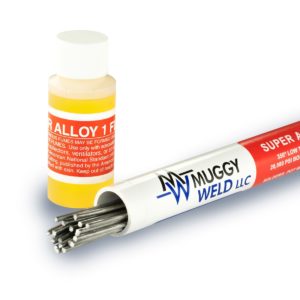
Super Alloy 1 Low-Temperature Solder
Price range: $55.00 through $980.00350º F multi-metal solder joins pot metal and all white metals, in any combination🌡 Melting Temperature 350 / 177 ⇄︎ Bonding Strength 20000 psi, 137.89 MPa -
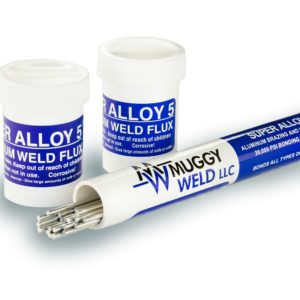
Super Alloy 5 Aluminum Welding and Brazing Rod
Price range: $55.00 through $980.00600°F aluminum welding, brazing, and soldering rod. Ideal for aluminum boat repair and cast aluminum.🌡 Melting Temperature 600 / 317 ⇄︎ Bonding Strength 30000 psi, 206.84 MPa -
Sale!

SSF-6 Silver Solder Rod: Flux-Coated SSF-6 56% Brazing Rod
Price range: $115.00 through $3,000.00High-Strength, 56% Silver Solder Rod🌡 Melting Temperature 1150 / 621 ⇄︎ Bonding Strength 70000 psi, 482.63 MPa 🔧︎ Sizes Available (in) 1/16 🔧︎ Sizes Available (mm) 1.58