
Pot Metal Solder Tips with Super Alloy 1
Many welders would love to learn how to solder pot metal. Fortunately, pot metal and zinc die cast repair is now a quick and easy process with Super Alloy 1. This instructional video shows step by step how to solder pot metal, zinc die cast, monkey metal, white metal with Super Alloy 1 multi-metal solder and flux kit from MuggyWeld.com
But what is exactly is pot metal, and why was it used so extensively in classic car/antique automobile construction?
Pot metal is, essentially, a mix of non-ferrous metal scraps that have been thrown into a “pot” and melted down to create inexpensive castings and parts. Varying metals are utilized in these blended alloys including zinc, copper and lead, and the resulting “pot metal” is very soft and melts at a low temperature.
Due to its low cost and availability, pot metal is still used to manufacture automotive parts, toys, tools, furniture fittings, electronics, and costume jewelry.
Unfortunately, “throw it in the pot” metallurgy can create some problems over time. Classic car parts that have been formed with molds and casts frequently break down: pitting, shattering, cracking, and bending are problems antique auto owners encounter when restoring original car parts, and pot metal is not easily repaired due to its low melting point.
Fortunately, Super Alloy 1 addresses these concerns.
With a working temperature of only 350°F, Super Alloy 1 is the lowest temperature solder on the market. And Super Alloy 1’s liquid flux transforms from honey colored to root beer brown when the parent metal reaches 350°F, acting as a visual temperature guide.
Super Alloy 1 solder flows at such a low temperature, almost any heat source can be used to apply it: propane, butane, oxyacetylene, heat gun etc
In addition to pot metal, Super Alloy 1 effectively bonds the following metals, individually or in any combination: lead, aluminum, zinc die cast, pewter, galvanized metal, steel, copper, brass, bronze, zinc plated steel, zamak, or monkey metal
Be sure to use a Dremel tool, grinding disc, or sandpaper prior to use, to ensure proper bonding.
Note: Please observe all AWS Safety & Health Guidelines when using Muggy Weld products.
Check Out These Products
-
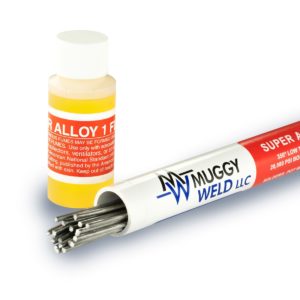
Super Alloy 1 Pot Metal Solder and Multi-Metal Solder
$69.00 – $109.00350º F multi-metal solder joins pot metal and all white metals, in any combination🌡 Melting Temperature 350 / 177 ⇄︎ Bonding Strength 20000 psi, 137.89 MPa -
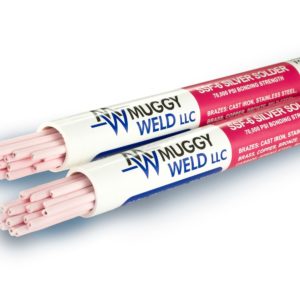
Silver Solder Rod: Flux-Coated SSF-6 56% Brazing Rod
$69.00 – $260.00High-Strength, 56% Silver Solder Rod🌡 Melting Temperature 1150 / 621 ⇄︎ Bonding Strength 70000 psi, 482.63 MPa 🔧︎ Sizes Available (in) 1/16 🔧︎ Sizes Available (mm) 1.58 -
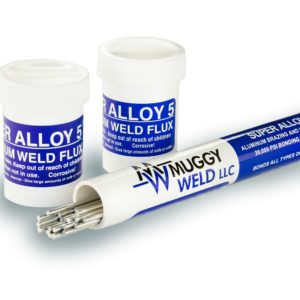
Super Alloy 5 Aluminum Welding and Brazing Rod
$69.00 – $109.00600°F aluminum welding, brazing, and soldering rod. Ideal for aluminum boat repair and cast aluminum.🌡 Melting Temperature 600 / 317 ⇄︎ Bonding Strength 30000 psi, 206.84 MPa