
Pot Metal Restoration Testimonial
Classic car restoration often comes down to one difficult question: repair the original part or search for a replacement. For owners of rare vehicles, replacement is rarely simple. Many parts have been out of production for decades. Others exist only in private collections or salvage yards. When a damaged component is part of the vehicle’s original history, most restorers would rather save it than replace it.
That was the challenge facing Muggy Weld customer Greg during the restoration of his Nash 1929 Touring Car. The windshield rail had broken in 3 places, and the damaged part was made from pot metal, one of the most challenging metals found on vintage automobiles.
Dear Muggy Weld:
Here are those pics of the windshield repair of the 1929 Nash Touring Car. The Super Alloy 1 low temp solder and Heat Freeze did the job.
The products and instructional videos are great, because they do actually work as advertised. Not only was it a strong repair, but I was able to drill and tap threads into the material for mounting. Here is the finished product.
Next time I have some kind of tricky metal to repair, I’ll be sure to give you guys a call.
Greg
Why Pot Metal Creates Problems During Restoration
Manufacturers used pot metal extensively during the early automotive era. The material cast easily into detailed shapes and cost less than many alternatives. As the years passed, however, restorers discovered its weaknesses.
Pot Metal Becomes Brittle with Age
Decades of vibration, stress, weather exposure, and handling can weaken pot metal components. Cracks and breaks often develop in thin sections.
Original Parts Are Difficult to Replace
Many vintage automobiles use castings that were produced in limited numbers. Finding an exact replacement can take years.
High Heat Can Ruin the Part
Pot metal has a relatively low melting temperature. Traditional welding methods often create more damage than the original break. These challenges make low-temperature repair methods especially valuable during antique car restoration.
Restoring a 1929 Nash Windshield Rail
Greg’s restoration project centered on a broken windshield rail from his 1929 Nash Touring Car. The part had fractured in three separate locations and required a repair method that would preserve both strength and appearance. Instead of replacing the part, Greg chose to repair the original casting using Super Alloy 1 rod and flux. The repair allowed him to keep an authentic component as part of his restoration.
The Importance of Heat Control
One of the biggest challenges in pot metal restoration is avoiding remelt. When repairing multiple sides of a casting, heat applied to one area can soften or damage a repair that was completed earlier. Greg addressed this challenge by using Heat Freeze Heat Paste while working on the opposite side of the windshield rail. The paste protected the completed repair and helped prevent previously soldered sections from reheating during the next stage of the project.
Protecting Previous Repairs
Heat management becomes increasingly important when restoring complex castings. Without protection, earlier repairs may soften before the new repair is complete. Heat Freeze Heat Paste acts as a barrier that absorbs heat and helps maintain the integrity of completed work.
A Successful Restoration Result
After completing the repair, Greg reported excellent results. The repaired windshield rail proved strong enough to allow drilling and tapping new threads for mounting purposes. For many restorers, that level of strength is critical because repaired parts often need to handle mechanical loads after installation.
Why Restorers Choose Repair Over Replacement
Vintage vehicle enthusiasts often place a high value on originality.
Original Parts Preserve History
The parts installed at the factory tell part of the vehicle’s story
Replacement Components May Not Fit Correctly
Many reproduction parts require modification or compromise authenticity.
Rare Parts May Be Unavailable
Some casting simply cannot be purchased anymore. Repairing original components allows restorers to retain as much of the vehicle’s history as possible.
Tips for Pot Metal Restoration Projects
Successful pot metal restoration depends on preparation and patience.
Protect Finished Repairs
Use adequate heat protection when working near previously repaired areas.
Allow Parts to Cool Completely
Cooling before removing heat protection helps safeguard both the repair and the part itself.
Keep Heat Absorption Paste Clean
Clean material performs better and lasts longer over repeated projects.
Leave Space Around the Repair Area
Heat absorption paste works efficiently and can draw heat away from the repair if placed too close.
Saving a Piece of Automotive History
Every successful restoration preserves more than metal. For owners of rare automobiles, original parts represent craftsmanship, history, and years of careful preservation. The restoration of Greg’s 1929 Nash Touring Car demonstrates how damaged pot metal components can often be repaired rather that discarded.
With proper heat control and low-temperature repair techniques, broken castings that once seemed beyond saving can remain part of the vehicle they were built for nearly a century ago.
Disclaimers:
Please visit https://www.aws.org/Standards-and-Publications/Free-Resources/#YourResources prior to using our welding products, and adhere to all AWS welding safety guidelines.
Further product safety information is available at https://muggyweld.com/safety-guidelines
Muggy Weld LLC shall not be liable for any loss, injury, claim, liability, or damage of any kind resulting in any way from (a) your use of this Site, (b) any services or products obtained from this Site, (c) any errors in or omissions from this Site, (d) the unavailability or interruption of this Site or any features thereof, (e) any content contained on this Site.
MSDS sheets available with purchase from MuggyWeld.com, upon request.
Updated 9/6/26
Check Out These Products
-
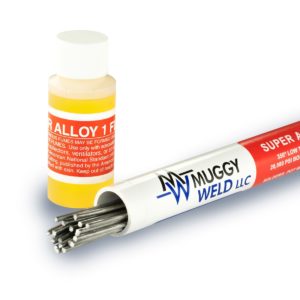
Super Alloy 1 Low-Temperature Solder
Price range: $55.00 through $980.00350º F multi-metal solder joins pot metal and all white metals, in any combination🌡 Melting Temperature 350 / 177 ⇄︎ Bonding Strength 20000 psi, 137.89 MPa -
Sale!
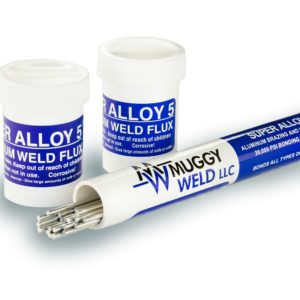
Super Alloy 5 Aluminum Welding and Brazing Rod
Price range: $48.30 through $686.00600°F aluminum welding, brazing, and soldering rod. Ideal for aluminum boat repair and cast aluminum.🌡 Melting Temperature 600 / 317 ⇄︎ Bonding Strength 30000 psi, 206.84 MPa -

SSF-6 Silver Solder Rod: Flux-Coated SSF-6 56% Brazing Rod
Price range: $135.00 through $3,000.00High-Strength, 56% Silver Solder Rod🌡 Melting Temperature 1150 / 621 ⇄︎ Bonding Strength 70000 psi, 482.63 MPa 🔧︎ Sizes Available (in) 1/16 🔧︎ Sizes Available (mm) 1.58